Before the First Whistle: Making the Walk to Your Peg Count
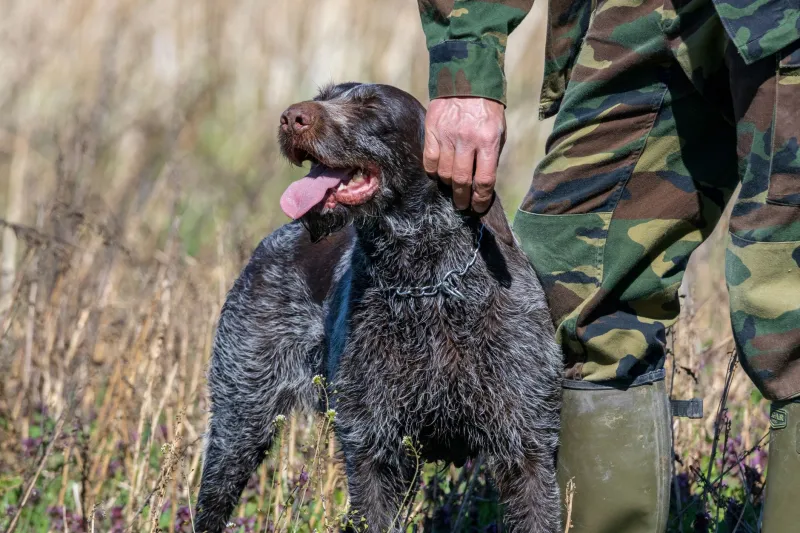
There is a certain ritual to a shooting morning. Boots are pulled on, thermos lids are tightened, and a dog watches every movement from the back of the vehicle with increasing urgency. Then comes the walk to the peg. For many handlers it is simply a means of getting from A to B: a lead clipped on, a brisk march across a field, and a dog towed along in the general direction of the action. It is easy to see why. There are guns to greet, a peg to find and weather to mutter about. But those few hundred yards are rarely dead time. Handled well, they are a rehearsal for everything the day will ask of the dog.
The principle is simple enough. A gundog learns from every repetition, not just the ones we label as training. If the approach to the peg is a scramble of pulling, lunging and last-minute corrections, the dog arrives at the stand already wound up. If it is calm, deliberate and full of small expectations, the dog arrives switched on but settled. Same walk, same dog, very different starting point.
Start at the motor
The session begins before the boot lid goes up. A dog that is bouncing against the tailgate while you wrestle with a slip lead is not in a learning frame of mind, and nor, frankly, are you. Take a breath. Let the dog wait until the lead is ready, then ask for a moment of stillness before clipping on. It does not need to be a formal obedience exercise. A hand resting lightly on the chest, a quiet word, and a dog that is standing rather than spiralling will do.
This is also the moment to decide what the walk is for. If the dog is young or new to driven days, the goal might simply be loose-lead walking past distractions. If it is an experienced campaigner, the aim might be sharper: walking to heel through gamey ground without casting, sitting politely while guns chat, and arriving at the peg with ears forward rather than eyes wild. A little clarity from the handler goes a long way.
The first fifty yards
Begin as you mean to go on. That means the lead is not a tow rope and the dog is not permitted to drag you towards the first interesting smell. Keep the pace ordinary. Stop occasionally, ask the dog to sit, then move on again without making a performance of it. These tiny interruptions teach a dog that stopping is normal, not a sign that the fun has ended.
If the ground is safe and the situation allows, a few minutes of heelwork on a loose lead are worth more than a hundred yards of pulling. Use your body rather than the lead: turn away, change pace, pause by a hedge. The dog should be watching you enough to notice. Do not clutter the walk with chatter. A quiet handler is easier to read than a noisy one, and a dog that is reading you is already beginning to focus.
Gates, stiles and small proofs
A shoot day is full of awkward little obstacles, and the walk in is the perfect place to practise them without an audience. Gates are a gift. Ask the dog to sit while you open one, walk through calmly, then close it before inviting the dog on. If it breaks the sit, reset without drama and try again. The same applies to stiles, narrow tracks and the edge of a拥挤 farmyard. These are not glamorous skills, but they are the sort of small manners that make a dog welcome on any shoot.
There is also the matter of other people. Guns, beaters and pickers-up will want to pass the time of day, and a dog that leaps at every hand is a nuisance. Use the approach to rehearse polite neutrality. Ask for a sit at a sensible distance, reward calm behaviour, and move on before the dog gets bored. You are not training a robot. You are training a dog that can be in company without becoming a liability.
Wind, scent and the art of not hunting
The Cotswold countryside is rarely short of scent. A stubble field, a tussocky headland or a strip of woodland edge can make a young dog believe it has been sent on a retrieve. The walk to the peg is where you teach the difference between being aware of scent and being ruled by it.
Keep the dog close and keep your own expectations modest. If the nose goes down and the pace quickens, do not jerk the lead. Change direction, ask for a sit, then walk on as though nothing has happened. The message is not that scent is forbidden; it is that scent is not an instruction to hunt. A dog that can walk through gamey ground without losing its head is a dog that will be far easier to handle when the first bird flushes in front of the line.
The last approach
As the peg comes into view, change gear. This is the point where many handlers rush: the dog is excited, the guns are settling, and the temptation is to hustle into position. Resist it. Find your spot, stand still for a moment and let the dog take in the scene. If it is expected to sit at the peg, ask for that sit before the first drive rather than after the first bird has already gone over.
A small routine helps. Stand where you intend to stand. Arrange the dog on the side that suits you and the ground. Check the lead, the whistle and the dummy bag. Then wait. A dog that has learned to wait at the peg before the action starts is much less likely to explode when the action does start.
A quiet word on kit
You do not need much for the walk in: a slip lead, a whistle, maybe a dummy if the ground and the day allow a short retrieve, and a pocket of treats or a favourite ball for the dog that needs a little extra reason to stay tuned. The point is not to turn the approach into a full training session. It is to use the minutes you already have.
By the time the first whistle goes, the dog should be neither flat nor frantic. It should be walking beside you, reading the ground, and waiting for the next instruction. That is not luck. It is the product of a few hundred yards of quiet, repeated expectation — the long walk in, done properly.