Five Habits Trial Grounds Teach You Eventually: A Newcomer's Field Notes

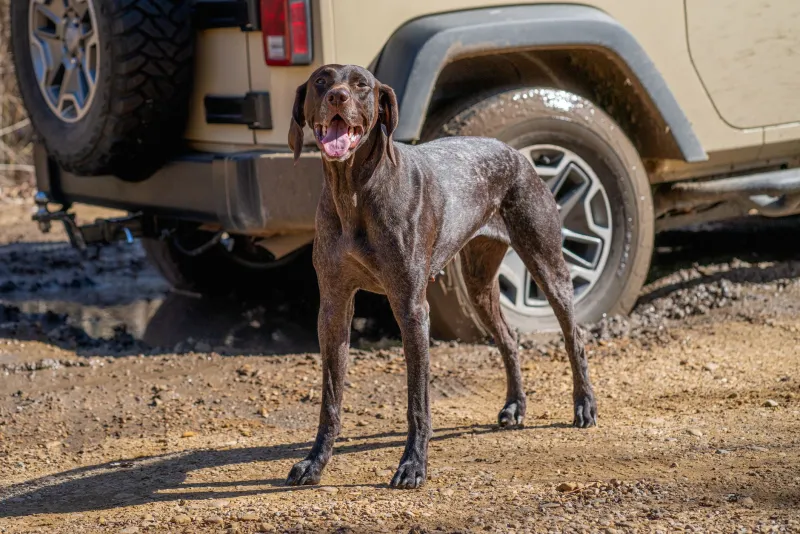
Photo: gundog handler waiting at field trial Cotswold countryside labrador, via wallpapercave.com
There is a particular kind of education that happens at a field trial. You can read the schedule, watch the videos and practise until the dummies are soggy, but the ground itself still teaches you things you did not know you needed to learn. For a newcomer, the first stake can feel like arriving at a exam you did not know had a practical paper.
The good news is that most of the lessons are not about secret handling tricks. They are habits. Small, repeatable behaviours that make the day calmer for you, fairer for the dog and more pleasant for everyone standing nearby. Here are five that tend to sink in only after the first outing.
Read the Ground Before You Read the Card
New handlers often spend the journey studying the running order and worrying about the judge. That is understandable, but the ground is doing most of the talking. Before you walk to the line, take a proper look at the terrain: where the wind is coming from, where the scent is likely to pool, where the cover changes and where a retrieve might fall blind.
This is not about second-guessing the judge. It is about giving your dog a fair chance. If you know there is a ditch on the left or a rise that will hide a falling bird, you can position yourself with a bit more care. On a Cotswold trial ground, the difference between a clean line and a messy one is often a few metres of hedgerow and a gust of wind. Read the ground and the card makes more sense.
Waiting Is Part of the Test
Field trials involve a lot of waiting. There is the wait before your turn, the wait while other dogs run, and the wait when the judges are discussing something you cannot hear. New handlers often treat this as dead time and let the dog fidget, whine or drift into bad habits. Experienced handlers treat it as part of the day's work.
Teach your dog to settle quietly at the vehicle or on a lead, not because he is being punished, but because calm is a skill. Practise it at home, then at a local shoot, then on a trial ground before your first stake. A dog who can switch off between runs is easier to handle when his turn comes. You will also be less tired, which matters more than most newcomers realise.
The Gallery Is Background Noise
The gallery is not your audience. It can be surprisingly easy to forget that when you feel a dozen pairs of eyes on your back. Some people will watch because they are interested, some because they are waiting for their own turn, and some because they are simply enjoying a day out. Very few are keeping score on your behalf.
Handle for the judge, the dog and the ground, not for the spectators. If you start playing to the crowd, your timing goes, your voice changes and the dog picks up your tension. Keep your focus narrow. A quiet word to your dog matters more than a glance at the gallery. The best handlers often look almost boring from a distance, and that is meant as a compliment.
Handle Less, Mean More
New handlers often talk too much. It is nerves, mostly. A whistle here, a command there, a bit of encouragement when the dog is already doing the right thing. The dog learns to switch off from the noise, and the handler learns that volume is not the same as control.
Try to make every command count. If the dog is on the right line, leave him alone. If he needs a turn, give a clear signal and then stop talking. In training, practise silence as deliberately as you practise recall. A dog who responds to a single whistle is worth more than a dog who eventually obeys after a stream of instructions. Less noise also makes you easier to read, which is the whole point.
Leave Your Ego at the Gate
Trials are competitive, and there is nothing wrong with wanting to do well. But a novice stake is not the place to prove you are the next great handler. It is a place to learn how your dog behaves under pressure, how you cope with nerves and what you need to work on next.
If the run goes badly, thank the judge and the steward, collect your dog and go home with something useful. If it goes well, enjoy it without deciding you have cracked the whole business. The handlers who improve are usually the ones who treat every stake as information. Ego gets in the way of that. A bit of humility makes the day easier and the dog's experience better.
Build the Habit Before the Stake
None of these habits are exclusive to trial day. You can practise settling at a shoot, reading the wind on a dog walk, ignoring distractions in the park and handling with fewer words in the training field. By the time you stand on the line, the habits should already be familiar.
That is the real lesson of the trial ground: preparation is not just about the dog's retrieves. It is about the handler's behaviour. Get the habits right and the day becomes less of a performance and more of a partnership. The ribbon is nice, but the partnership is what you take home.