Coughs in the Crates: Running a Working Kennel Through Kennel Cough Season
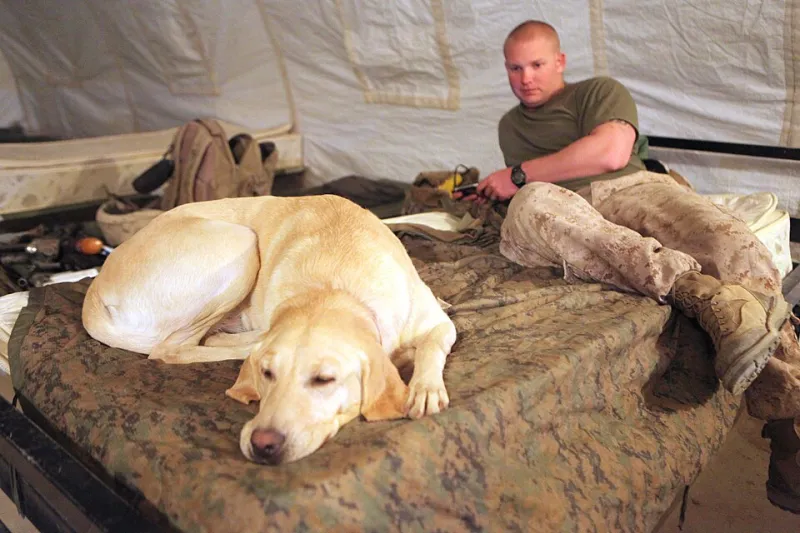
Photo: Sgt. Earnest Barnes, U.S. Marine Corps, Public domain, via Wikimedia Commons
It usually starts the same way. You're loading the truck at half six, the dogs are bouncing, and one of them gives a dry, honking cough as you lift it into the box. By the time you've driven to the shoot you've convinced yourself it's nothing. By the following Tuesday, three dogs are at it and your season has a hole in it.
Kennel cough is one of those things that every working dog owner meets eventually. It's rarely serious in a fit adult gundog, and it's genuinely miserable to manage. The trick is neither panicking nor shrugging.
What You're Actually Dealing With
Infectious tracheobronchitis — kennel cough to you and me — is a catch-all term for a respiratory infection usually involving Bordetella bronchiseptica and parainfluenza, sometimes with other bugs chipping in. It spreads through droplets and contaminated surfaces: shared water bowls, crates, hands, lead ropes, the tailgate of a truck that half the shoot has leaned on.
Incubation is typically a handful of days. A dog can be infectious before it ever coughs and can keep shedding for a week or two after. That's why kennel cough travels through a shooting community so efficiently — we all handle each other's dogs, share lifts and stand about in the same gateway.
Vaccination Timing Before the Season
Most vets offer kennel cough cover either as an intranasal spray or an injectable, and it's usually given alongside the core boosters. The intranasal version tends to get working quickly — protection builds in the days after administration rather than weeks.
My rule of thumb: get it done well before the season starts, not the week before. Giving a dog a squirt up the nose on Tuesday and shooting it on Saturday is optimistic at best. Aim for two to three weeks of lead time so the immunity has settled in.
And be honest about what the vaccine does. It reduces the risk and softens the symptoms; it doesn't turn your dog into a force field. Vaccinated dogs can still catch it. They usually get over it faster.
Socialisation Versus Exposure
Here's the tension every working dog owner lives with. A gundog needs to be out in the world — on shoots, at training groups, in the back of a stranger's truck — or it'll be useless when it matters. But every one of those things is an exposure risk.
I don't think the answer is to wrap a dog up. A gundog that never meets another dog until its first driven day is a far bigger problem than a cough. But there's a difference between sensible mixing and careless mixing.
- Don't take a coughing dog anywhere. Anywhere.
- Avoid shared water troughs and communal bowls at training groups where you can — bring your own.
- If a local training club has an outbreak on its books, skip a week. Nobody will think less of you.
- Keep an eye on the dogs your dog actually spends time with. Kennel cough moves through social networks, not through the air across a county.
When One Dog Starts Coughing
In a multi-dog kennel, the first cough means acting fast rather than waiting to see.
Separate the cougher immediately, even if it's just into a separate run with its own water and bedding. Feed and water the coughing dog last, and wash your hands between groups. Change your top if you've been handling a cougher before you go near the others. Sounds fussy; takes ninety seconds; saves weeks.
Rest matters more than anything. A dog with kennel cough needs to be off work — no shoots, no training, no long walks in cold air. Gentle garden mooching is fine. Hard exercise, cold mornings and a lot of lead work will turn a mild cough into a lingering one.
Most working dogs I know are back in the truck after two to three weeks, though the cough can hang around at the tail end. Keep them out of the shooting field until the cough has fully cleared, not just until it's quieter.
When to Ring the Vet
A fit adult gundog with a honking cough and a good appetite is usually fine with rest and time. Ring your vet promptly if you see any of these:
- A puppy, an elderly dog, or a pregnant bitch affected
- Lethargy, going off food, or a temperature
- A wet or productive cough, or laboured breathing
- Symptoms that are no better after a week, or clearly worsening
- Any sign of secondary infection — discharge, rattly chest, a dog that just isn't right in itself
Kennel cough in a young pup or a bitch in whelp deserves a proper conversation with your vet rather than a forum thread.
Protecting a Shoot Day
Practical damage limitation comes down to a phone call. If your dog is coughing, tell the keeper before the day, not on the tailgate. A short, honest message — "mine's coughing, I'm leaving it at home this week" — is respected. Turning up and hoping nobody notices is how a whole shoot ends up resting dogs through December.
Keep a written note of who was out on which day if you help run a line. If a cough goes round, you'll want to know where it started and who needs a heads-up.
And keep a separate set of kit for the kennel and the truck. It's a small habit that pays for itself.
Not Cotton Wool
Kennel cough is an inconvenience, not a catastrophe. The dogs that come through it best are usually the fit, well-vaccinated ones with owners who spotted it early, separated smartly and gave them a proper fortnight off rather than a grudging three days.
Plan the vaccination in the summer, keep an eye on the kennel through the wet months, and don't be the handler who brings the cough to the shoot. That's the whole policy — and it'll see most Cotswold kennels through the season without too much drama.