The Matching Pair Myth: Why a Brace of Littermates Rarely Earns Its Keep
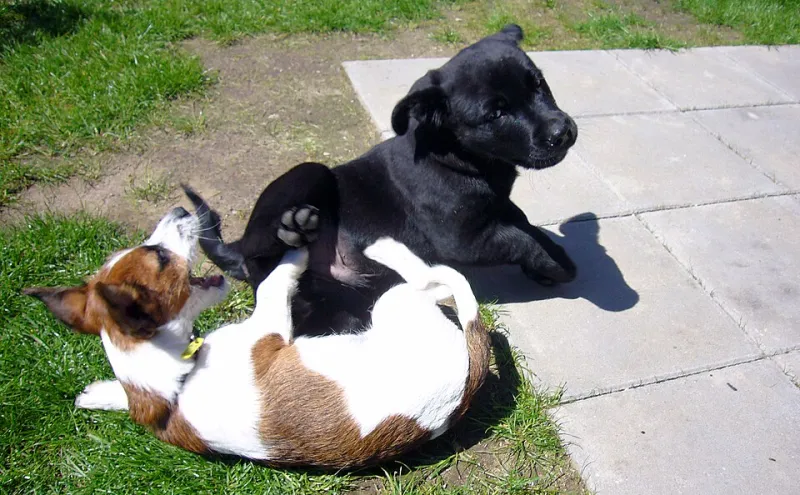
Photo: Glenn Castillo, CC BY-SA 4.0, via Wikimedia Commons
On a wet Tuesday in a Cotswold farmyard, it is easy to see the appeal. The breeder lifts two pups from the same litter, both with the same broad heads and the same useful pedigree, and they tumble over each other in the straw like they have been booked as a double act. The buyer does the sums: one journey, one deposit, one lot of paperwork, and a brace ready for the next season. It feels sensible. It rarely is.
Buying two puppies from one litter is not simply buying one good gundog twice. It is buying a small, intense relationship that will shape both dogs long before either sees a shoot. Sometimes that works. More often, it gives the handler one dog who pushes and one who yields, a kennel routine with twice the friction, and a training diary that collapses under its own weight.
The appeal is easy to understand
A brace sounds traditional, and in the right hands it can be. But the working gundog world is full of quiet compromises dressed up as efficiency. Two pups means one trip to the breeder, one set of vaccinations, one early socialisation window and, in theory, two dogs that are already used to each other. For a novice handler, there is comfort in that. The pups have company; the handler has a ready-made pair.
The trouble is that puppies are not a matching set of garden furniture. They are individuals with different tempers, different recovery rates and different appetites for pressure. Put them in the same kennel, the same training field and the same household, and those differences do not politely sit side by side. They sharpen.
Rivalry starts earlier than you think
Littermate rivalry is not always a dramatic scrap over a bowl. Often it is subtler: one pup learns to shoulder through the door first, while the other learns to hang back. One pup claims the best spot in the run; the other becomes watchful. One gets the first fuss from every visitor; the other gets the habit of waiting. None of this looks like a problem in August. By the following autumn, it can be the foundation of two very different working dogs.
The pushy pup often becomes the one who pulls on the lead, barges out of the crate and treats every retrieve as a race. The quieter pup becomes cautious, sometimes clingy, sometimes slow to commit to a dummy or a cold water entry. The handler then spends months trying to dial one dog down and wind the other up. That is not a training plan. It is a repair job.
Two dogs, two routines, one pair of hands
A working gundog needs routine: predictable feeding, predictable exercise, predictable rest and a clear sense of what the crate means. Two pups from the same litter can have all of that, but only if the handler is willing to run two routines rather than one merged routine. That means separate walks, separate training sessions and, in the early months, separate periods of being handled. It also means separate crates, ideally out of sight of each other for part of the day.
That is a lot to ask. Most people with a job, a family and a shoot diary are already stretched by one puppy. Two pups do not halve the work; they multiply the small decisions. Which pup goes out first? Which one gets the retrieve? Which one is learning to sit quietly while the other works? If the answer is always 'they can take turns', the chances are neither dog is getting a clean lesson.
Training separately is not a slogan for perfectionists. It is the only way to see what each dog actually understands. A pup who looks steady in the garden may be relying on the other dog's presence. A pup who looks bold in the kennel may be feeding off competition rather than confidence. Separate sessions expose the truth, and the truth is what you need before you take a dog into a field.
A brace on the shoot day is not a pair of solo dogs
On a driven day in the Cotswolds, the expectation is that dogs work as a team: one dog at the peg, another waiting quietly, a picker-up moving between drives, a handler keeping track of wind, birds and safety. A brace can look impressive. But a brace of littermates brings a history into that field. If they have spent eighteen months competing for space, attention and retrieves, the shoot day will not magically turn them into colleagues.
You may see it in the small things. One dog refuses to honour the other's mark. One dog slips forward when the other is sent. One dog whines in the truck while the other works. None of these is unusual in any gundog, but littermates often have a sharper awareness of each other, and that awareness can cut across the handler's instructions. The result is a handler who is managing a relationship rather than working a dog.
Sensible alternatives for handlers who want two
The good news is that wanting two working dogs is not the problem. The problem is trying to raise them as a pair. A better route is to stagger them. Buy one pup now, give it eighteen months of training and field experience, then consider a second from a different litter. By then the first dog has a routine, a standard and a place in the household. The second pup arrives into a settled system rather than a competition.
If two dogs are already in the kennel, separate them more than feels natural. Train in different fields, walk them at different times, and let each dog have a handler-led life. Do not let them become a package deal. If you are set on a brace for the shoot, plan for two distinct training programmes and accept that the partnership on the day has to be built, not assumed.
Above all, do not buy a second pup to keep the first one company. Company is not the same as training. A gundog needs a handler more than it needs a littermate, and a handler with two unsettled dogs has neither a team nor a clean conscience.
The bottom line
Two pups from one litter can look like a shortcut to a brace. Most of the time, they are a shortcut to divided attention. The countryside is full of good dogs that became good because someone gave them a clear routine and a fair share of the handler's time. Buying a brace is not a bargain if it costs you the chance to train either dog properly.