After the Last Rocket: Rebuilding a Rattled Gundog's Confidence
By 9 November, the village hall bonfire is usually a heap of damp ash and the last display rockets have stopped rattling the windows. For most gundogs, that is the end of it. For a noise-shy dog, the week after Bonfire Night can be the tricky bit: a stray bang from a neighbour's garden, a car backfire on the lane, a pigeon scarer in a field, or a late rocket let off without warning. Each one can top up the worry long after the main event.
If your dog has spent the past few nights panting, pacing or trying to get behind the sofa, this is not the week to prove anything. It is the week to lower the volume, steady the routine and rebuild confidence in small, deliberate steps. The shooting season is still running, but a missed Saturday is a far cheaper price than a dog whose trust in loud noise is properly broken.
First, Read the Dog You've Got
Noise sensitivity is not one thing. Some dogs are startled and recover in minutes. Others are genuinely panicked and take days to settle. The signs are not always dramatic, which is why handlers miss them. A dog that goes very still can be just as worried as one that bolts.
Watch for lip licking, yawning, ears pinned back, a tucked tail, trembling, panting when the dog is not hot, pacing, hiding behind furniture, clinginess, refusing food, or going flat and silent. Some dogs become destructive, vocalise, or try to dig out of a crate. Others startle at ordinary sounds such as the fridge door or a dropped spoon. On a lead walk, a dog that keeps scanning the sky is telling you he is still on alert.
It also helps to know what you are dealing with. A dog that has had a bad week after fireworks may be showing sound sensitivity, but a sudden change in an older dog deserves a vet check. Pain, thyroid problems, hearing changes and some medications can all affect how a dog reacts to noise. Do not assume it is only behavioural because the timing fits.
A Quiet Week, Not a Training Week
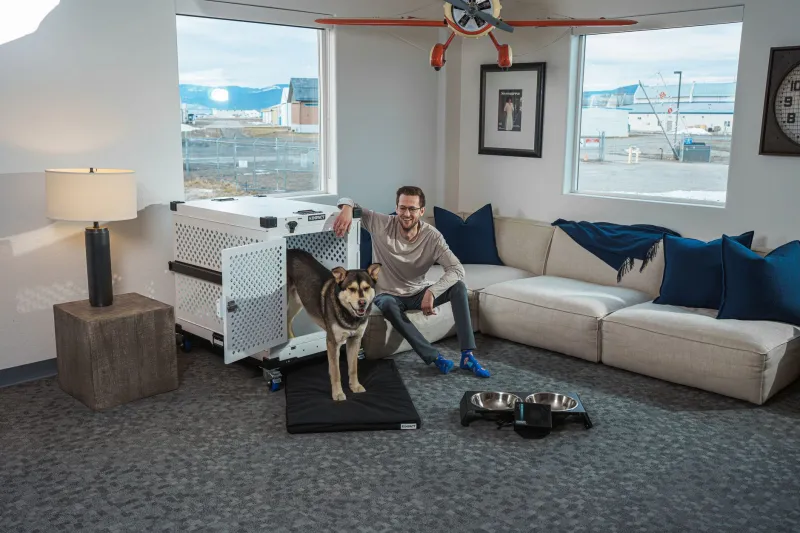
For the first few days after a bad night, management beats training. Think of it as a decompression week. Keep meals, toilet breaks and bedtimes predictable. Give the dog a safe place away from the street and the front window, with a familiar blanket and maybe a radio or fan at low volume. Let him choose whether to be near you, but do not force cuddles or drag him out of his den.
Lead walks at quiet times are better than a busy park. Let him sniff. Sniffing lowers arousal and gives a dog something to do that is not listening for bangs. Short, boring walks on familiar ground are fine. Avoid known trigger times, crowded places, visiting dogs and any event where someone might let off a rocket. If he will not eat, or is still not sleeping after a couple of days, speak to your vet.
Keep the rest of the household calm as well. A noisy kitchen, a slammed door or a shouting television is not helpful. If you have other dogs, make sure they are not crowding him either. The aim this week is not to create a super-confident gundog by Friday. It is to get sleep, appetite and a settled nervous system back on track.
Rebuilding Sound Confidence in Inches
Once your dog is eating, sleeping and happy to go out, you can start gentle sound work. The key word is gentle. You are not trying to flood him with noise until he gives up reacting. That old-fashioned approach is unfair and it often makes the problem worse.
Work below the dog's threshold. That means a sound he notices but can still cope with, at a distance or volume where he will still take a piece of chicken. If he stops eating, you have gone too far. Start with recorded sounds at low volume while he is doing something pleasant, such as eating or sniffing out scattered kibble. Keep sessions short — a couple of minutes is plenty — and stop while he is still relaxed. Recorded sounds are only part of the picture, though. Real bangs carry echoes, pressure and distance changes that a phone speaker cannot copy.
For a working gundog, gunshot confidence should be rebuilt with an experienced trainer, not a DIY experiment in the back garden. Distance is your friend. A single shot from a hundred yards away, paired with something good, is worth more than ten shots at close range. Build slowly over weeks, not minutes. If your dog startles, go back a step and make the next repetition easier. Do not repeat the same scary sound 'until he gets used to it'. That is flooding by another name.
The Shoot Day Question
Before you pack the truck for the next shoot, ask yourself some honest questions. Is he sleeping normally? Is he eating? Does he settle within a few minutes after a sudden bang, or does he stay wired for hours? Will he happily get into the crate and travel? If the answer to any of those is no, leave him at home with someone he trusts.
A busy shoot day is not a test. It is a working environment with guns, beaters, birds, vehicles and unpredictable noise. Taking a rattled dog along to 'see how he goes' is a gamble with his confidence and with everyone's safety. A quiet day, a long sniffy walk and a chew in front of the fire will do more for him than a drive he is not ready for. There is no shame in a season with fewer days. The dog does not know what he is missing; he only knows how he feels.
If you are unsure, take advice from your trainer. A calm dog that is nearly ready might manage a quiet day with one drive, but only if the plan is sensible and the ground is safe. A dog that is still panicking is not nearly ready.
When to Call in the Vet or a Behaviourist
Get veterinary advice if the panic lasts for hours, if the dog injures himself, if he cannot eat or sleep, or if this is a new problem in an older dog. Medication is sometimes part of the plan, but only a vet should prescribe it. Do not borrow tablets from another dog or try a human remedy from the internet.
Ask for help from a clinical animal behaviourist if your dog is not recovering after several days, if he is showing aggression through fear, or if he cannot settle even in a quiet house. In the UK, look for someone registered with the APBC or ABTC. A good gundog trainer can help with gunshot desensitisation, but clinical panic needs clinical help. The two can work together.
The week after Bonfire Night is not a write-off. It is a reset. Keep the pressure low, the routine boring and the steps small. By the next shoot day, you will know whether your dog is ready — and if he is not, waiting is the kindest decision you can make.