Over the Hedge and Still Going: Recovering a Runner Without Wrecking the Drive
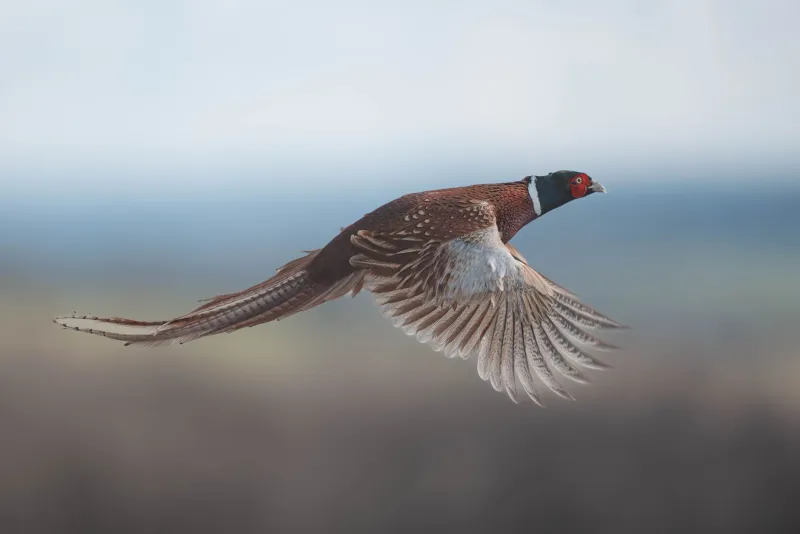
The bird comes over the hedge at forty yards, wings working like a duck's, and you know before it lands that it isn't dead. It pitches into the kale two fields over. The drive isn't finished, your dog is already up on its back legs in the box, and somewhere behind you a gun is still reloading. This is where picking-up gets decided — and it's where most novice handlers get it wrong.
Not through cruelty or laziness, but through panic. The bird is getting away, so the lead comes off, the dog goes, and forty minutes later you're both in the wrong place with nothing to show for it. There's a better way, and most of it happens before the dog is ever sent.
Read the bird before you read the dog
The first skill isn't handling, it's bird-watching. A pheasant that's dead folds up: wings tuck in, tail drops, and it comes down like a sack of feed. A pricked bird keeps its tail fanned, wings beating in short pumps, and it will glide a good deal further than you expect. Watch the last twenty yards of the flight rather than the first — that's the part that tells you whether it's going to tower and drop, level off, or hit the cover running.
Once it's down, fix two things in your head: the spot where it landed, and where it went if it ran on. Say them out loud, quietly, under your breath. 'Landed short of the black gatepost, ran left along the ditch.' A spoken marker sticks better than a silent one, and it gives your fellow picker-up or the keeper something concrete to work with.
Marking is a discipline, not a glance
Turning your whole body to follow the fall is the natural thing to do, and it costs you the angle. Keep your feet planted, square your hips towards the bird, and look over the top of the dog's head rather than down at the dog. Take a bearing off something that will still be there in ten minutes — the lone ash at the corner, the gap in the fence, the change from stubble into grass — because one hedge looks much like another once you're inside it.
If the dog is pulling, let it pull. Don't let it turn you. That really is the whole of it.
Hold or send?
Two errors live here and they behave like opposites. Send too early and you push a runner on. Hold too long and the bird creeps away until the scent has gone cold and the retrieve becomes a hunt.
A workable rule of thumb: if the bird is dead in view, send the dog and be done with it. If it's pricked and still moving, give it a minute to settle and stiffen, then work the dog on a quiet, controlled line rather than a flat-out cast. Distance, cover and wind all change the answer. A runner in a bare stubble field is a different problem from a runner in three-foot kale with a ditch alongside it. Sending a dog at full gallop after a bird you haven't properly placed is how you end up with a dog hunting the wrong field for ten minutes — and learning that hunting the wrong field is acceptable.
Working it with a second handler
If you're lucky enough to have another picker-up nearby, use them. One handler works the dog; the other marks and directs. Agree who is in charge before you start, because two people giving quiet advice at once turns into two people shouting.
Keep it simple. Point, use the odd stop whistle, and keep your voice down — the drive may still be running two hundred yards away. If the bird has run into thick cover, put the second handler on the far side to block it while your dog works towards them. A runner pushed back towards you is a runner you'll find. A runner pushed forward is one you'll never see again.
Sweeping with the line of beaters
When a runner gets up in front of the beating line and crosses into a wood, the temptation is to follow immediately. Don't. Wait for the drive to finish, then sweep from the far side with the beaters, pushing back into the wind towards the ground you came from. It feels slow. It works.
The one thing to avoid is walking the bird forward into the next drive's cover. You will not catch it, and you will spoil somebody's afternoon into the bargain.
Why you make the retrieve
There's an easy argument that a runner is only one bird, and the day is nearly over. Set that against what happens to a pricked pheasant that is never found: a slow business of hours or days, foxes, infection, and a bird that was shot in good faith and deserved better. That's the welfare case, and it's the whole case.
There's a training case too. A dog that is regularly allowed to leave a runner behind learns that a moving bird isn't its responsibility. Six months of that and you have a dog that walks past wounded birds.
Other people's ground is other people's ground
Boundaries matter more than the bird. If a runner crosses into a neighbouring shoot's drive, you do not walk in after it. You find the keeper, you explain where the bird went, and you take their instruction — sometimes that means waiting until the drive is over, sometimes it means leaving it, and sometimes it means a phone call between keepers who've known each other for twenty years.
Walking through a working drive is the fastest way to lose friends you'll need next season.
Before the next drive: two minutes with the keeper
A short conversation at the truck saves a lot of standing about later.
- Where does our picking-up ground stop, exactly?
- Who else is working this line, and where are they posted?
- If a bird crosses, do I come and find you, or hold until the whistle?
- Is there a dog free to help work a runner?
- What time does the next drive move off?
- Can I come back to this ground after the day finishes?
The handler who asks those six questions in November is the one the keeper rings in December. And the dog that learns to be sent only on a marked bird, worked steady, and finished properly is the dog that will still be doing it at nine years old.