The Long Walk In: What a Season on the Beating Line Taught Me About My Own Dog
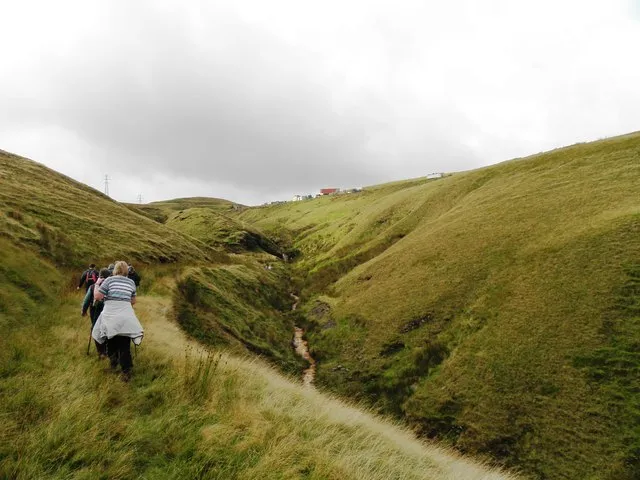
Photo: Michael Steele, CC BY-SA 2.0, via Wikimedia Commons
I spent my first four seasons on a shoot doing the same thing: parking up, walking to a peg, loading, standing still, shooting, going home. I thought I was learning the shoot. I was learning a car park and a view.
Then a keeper asked whether I fancied walking a drive instead. Same shoot, same dog, completely different education.
Why the Peg Only Teaches You Half the Job
Standing at a peg is a strange, narrow version of field sport. You watch one slice of sky, you hear birds before you see them, and everything that happens beyond the hedge is somebody else's business. Your dog learns to sit quietly and mark. That's a fine skill. It's also about fifteen per cent of what a working gundog is asked to understand.
Walking a line puts you inside the drive. You see where the birds get up, what makes them turn, which way the wind is actually running along a hedge rather than which way the weather app promised. You feel a drive build and then break. Within a season you start to know, in your knees, when the birds are going to lift.
That knowledge doesn't stay on the shoot. It travels home with you and quietly rewires how you train.
Reading a Drive From the Inside
Here's the thing nobody tells a newcomer: most of what a keeper does is invisible until you're stood next to him.
The tapping of sticks, the gap left deliberately open at the end of a wood, the bit of game crop nobody walks because it's meant to hold birds rather than push them — all of it is choreography. Once you've been part of the chorus line for a few drives, you stop assuming birds appear by accident.
You also learn how quickly a drive can go wrong. A dog pushing too far ahead, a beater turning a corner too early, someone chatting at the wrong moment — I've watched a whole line of pheasants drift sideways over a boundary because of one careless bit of noise. Seeing that with your own eyes makes you a good deal less inclined to blame your dog for a blank spell.
Scent Lessons the Training Field Can't Give You
You can set up dummy lanes in a meadow from now until Christmas and still not understand what happens to scent in a frosty beech wood at eleven in the morning.
Beating puts you in the middle of working scent, day after day, in every sort of weather. You notice how scent pools in dips, how it slides down a slope and then stops dead at a wall, how a wet dog on a wet day leaves a trail you could follow to the next county. You start to see why your spaniel casts where it casts — and why it sometimes looks like it's ignoring you when it's really just obeying its nose in a place you'd never have thought to look.
That single realisation has saved me more arguments with my own dog than any book. Half the time she wasn't being stubborn. She was working air I couldn't see.
Etiquette, Keepers and Being Useful
There's a practical side to beating that has nothing to do with dogs at all, and it's worth saying plainly because the newcomer always gets it wrong somewhere.
- Keep the line straight and keep it moving. Drifting is how birds slip behind you.
- Don't let your dog work the whole wood. Short, close casts, whistle back, let the drive come to you.
- Pick your birds. If the shoot is picking up behind, your job is to push, not to retrieve everything that falls in front of you.
- Ask the keeper before you do anything inventive. Especially the second season, when you think you know things.
- Thank the keeper. Properly. They'll remember it in October when you want a dog on the shoot again.
Being useful is underrated. A handler who turns up, keeps their dog under control and doesn't need managing is worth more to a shoot than a handler who shoots well and causes chaos in the wood. Keepers talk to each other. So do estates.
What It Did to My Handling
I'm not going to pretend I came back from that first season a different handler. It took two.
But the change was real, and it went in an unexpected direction. I became calmer. Not because I'd learned a clever technique, but because I'd spent nine Saturdays watching dogs and birds and weather instead of watching my own score. When it was my turn at the peg again, I cared less about the bag and more about the picture in front of me.
Patience is easier when you understand the machinery. If you know a drive is thin and the birds have moved on, you don't thrash your dog through the last ten minutes trying to manufacture something that isn't there. If you've watched a runner get up and go over the boundary on three previous drives, you handle the retrieve differently because you can predict what's coming.
My own dog got steadier, too — not from drilling, but from being worked around other dogs, other people and a lot of moving birds under mild pressure and clear rules. Beating is a superb schooling ground for a young dog, provided you don't let it become an excuse for a free-for-all.
If You're Thinking of Trying It This Season
Ring the keeper in the summer, not the week before the first day. Say you're new, say your dog is young, and ask what they'd prefer. Nine times out of ten they'll be pleased — the beating line is always short of people who'll turn up in the rain.
Take fewer birds than you think you should, walk more drives than you shoot, and leave the dog at home for the first day so you can watch with both hands free. Then go back the following week and watch it all make sense.
A season on the line won't turn a mediocre dog into a trial winner. What it will do is turn a handler into somebody who can read a drive, a scent line and a keeper's mood — and that's the bit most of us are actually short of.